
 EN
EN

Selecting the appropriate pvc forex board size for your project is a decision that directly impacts material efficiency, cost management, installation complexity, and the overall visual outcome of your signage or display application. PVC Forex boards, also known as PVC foam boards or free foam sheets, are available in a wide range of dimensions and thicknesses, each suited to different use cases ranging from indoor point-of-sale displays to outdoor architectural signage. Understanding which size configuration aligns with your project requirements involves evaluating factors such as substrate compatibility, fabrication methods, transportation logistics, structural integrity needs, and the specific visual presentation standards of your industry. This article provides a structured framework to help you identify the optimal pvc forex board size by examining dimensional standards, application-specific requirements, thickness considerations, and practical selection criteria that experienced buyers and fabricators use in real-world procurement decisions.
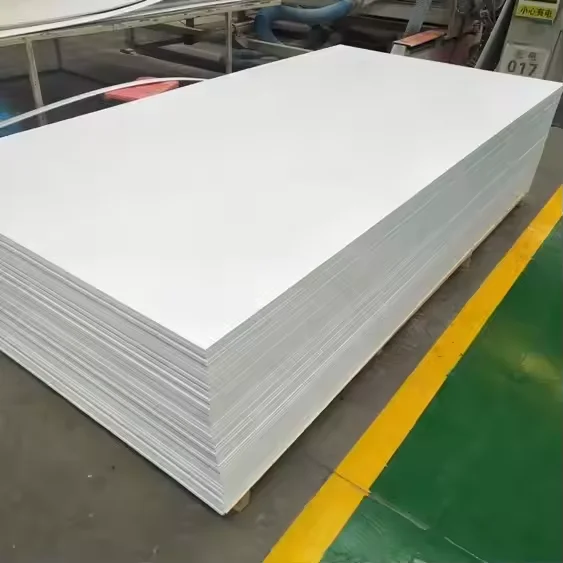
The decision of which pvc forex board size to choose is not merely about matching dimensions to available space; it requires a comprehensive understanding of how board dimensions interact with your printing equipment capabilities, mounting systems, cutting waste ratios, handling requirements during fabrication, and long-term performance expectations. Different industries have established preferred size conventions based on decades of practical experience, and deviating from these standards without proper justification can lead to increased costs, fabrication complications, or suboptimal finished products. Whether you are a sign manufacturer evaluating bulk purchasing options, a retail display designer specifying materials for a chain-wide rollout, or an architectural specifier selecting cladding panels for a commercial facade, this guide will equip you with the technical knowledge and practical insights needed to make informed size selection decisions that balance performance requirements with economic considerations.
Understanding Standard PVC Forex Board Dimensions
Industry-Standard Sheet Sizes and Their Origins
The most common pvc forex board size in international markets is 1220mm x 2440mm, which corresponds to the imperial measurement of 4 feet by 8 feet. This dimension has become the de facto industry standard due to its compatibility with the majority of flatbed printing systems, CNC routers, and fabrication equipment designed for the signage and display industries. The 1220x2440mm format provides an optimal balance between material utilization and handling convenience, allowing two-person teams to maneuver sheets without requiring specialized lifting equipment while still offering sufficient surface area for most commercial signage applications. This standardization also facilitates inventory management across the supply chain, as manufacturers, distributors, and fabricators can maintain consistent stock keeping units that serve the broadest range of customer requirements. The prevalence of this size means that cutting patterns, waste calculations, and pricing structures throughout the industry are typically optimized around this baseline dimension.
Alternative standard sizes for pvc forex board include 1560mm x 3050mm and 2050mm x 3050mm, which are frequently specified for large-format applications where minimizing seams is critical or where production equipment is configured to handle oversized substrates. These larger formats are particularly common in architectural signage, building fascia applications, and exhibition booth construction where visual continuity across expansive surfaces is a primary design consideration. The trade-off with larger sheet sizes involves increased material handling complexity, higher transportation costs due to dimensional shipping charges, and the requirement for specialized cutting and fabrication equipment capable of accommodating the extended dimensions. In Asian markets, you may also encounter metric-optimized sizes such as 1220mm x 3050mm or custom dimensions that align with regional manufacturing standards and local equipment configurations. Understanding which standard size is prevalent in your geographic market and supply chain is essential for achieving optimal pricing and availability.
Thickness Variations Within Standard Dimensions
While discussing pvc forex board sizes, it is crucial to recognize that thickness represents a critical dimension that significantly impacts both the physical properties and appropriate applications of the material. Standard pvc forex board products are available in thickness ranges from 1mm to 30mm, with the most common commercial thicknesses being 3mm, 5mm, 6mm, 10mm, and 19mm. The 3mm thickness variant is widely used for temporary signage, point-of-sale displays, and applications where weight minimization is prioritized over structural rigidity. This thickness can be easily cut with standard utility knives, making it accessible for quick-turnaround projects and situations where specialized fabrication equipment is not available. However, 3mm boards may require edge reinforcement or frequent replacement in applications involving repeated handling or exposure to moderate environmental stresses.
Mid-range thicknesses of 5mm to 10mm represent the sweet spot for most professional signage applications, offering sufficient rigidity for freestanding displays, wall-mounted signs, and moderately sized outdoor installations while remaining lightweight enough for practical handling and installation. A pvc forex board in the 6mm thickness range provides excellent printability, good dimensional stability, and the structural capacity to span moderate distances without visible flexing or warping. Heavier thickness options from 10mm to 19mm are typically specified for architectural applications, permanent outdoor signage, and situations requiring enhanced impact resistance or superior sound dampening properties. These thicker variants demand more robust mounting systems and may require pre-drilling for mechanical fasteners, but they deliver significantly improved longevity and performance in demanding environments. When evaluating which pvc forex board size is right for your application, the thickness dimension should be weighted equally with length and width in your decision matrix.
Custom Sizing Capabilities and Limitations
Many pvc forex board manufacturers offer custom sizing services that allow buyers to order sheets cut to specific dimensions that optimize material utilization for their particular production workflows. This capability is especially valuable for high-volume applications where even modest reductions in cutting waste can translate to significant cost savings over the course of a production run. Custom sizing can eliminate secondary cutting operations, reduce labor costs, and minimize scrap disposal expenses. However, custom dimensions typically come with minimum order quantities, extended lead times, and premium pricing compared to standard stock sizes. The economic viability of custom sizing depends on your production volume, the complexity of your typical cutting patterns, and whether your fabrication workflow can be standardized around a limited set of custom dimensions.
When considering custom pvc forex board sizes, it is important to understand the technical limitations of the extrusion and cutting processes. Most manufacturers can accommodate width variations within their standard production equipment, but extreme aspect ratios or dimensions that significantly deviate from standard formats may compromise material flatness or introduce internal stress concentrations that affect long-term dimensional stability. Additionally, non-standard sizes may limit your ability to source materials from alternative suppliers during supply chain disruptions or when seeking competitive pricing from multiple vendors. For many businesses, a hybrid approach proves optimal: maintaining inventory of the most common standard sizes for immediate availability and routine projects, while strategically ordering custom dimensions for specific high-volume applications where the economic benefits clearly justify the procurement complexity and reduced supply chain flexibility.
Application-Specific Size Selection Criteria
Retail Display and Point-of-Sale Applications
Retail display applications represent one of the largest consumption categories for pvc forex board, and size selection in this context is heavily influenced by visual merchandising standards, modular display system compatibility, and the need for rapid changeover capabilities. Standard retail fixtures such as endcap displays, shelf talkers, and hanging signs typically utilize pvc forex board dimensions that correspond to established retail grid systems. Common sizes in this category include 300mm x 400mm for shelf-mounted signs, 600mm x 900mm for freestanding floor displays, and 1200mm x 600mm for overhead hanging signs. These dimensions have become conventional because they integrate seamlessly with standard retail fixture mounting systems and maintain appropriate visual proportions within typical retail environments.
For point-of-sale applications, the right pvc forex board size must balance visibility requirements with spatial constraints at the checkout counter or product demonstration area. Compact sizes such as 200mm x 300mm or 250mm x 350mm are frequently specified for counter-top displays where available space is limited but high visual impact is still required. The thickness selection for retail applications typically ranges from 3mm to 5mm, as these thinner profiles reduce material costs for temporary promotional campaigns while still providing adequate rigidity for self-standing configurations with appropriate base supports. Retailers operating multi-location chains often standardize on a limited palette of pvc forex board sizes to achieve economies of scale in printing and fabrication, simplify inventory management across locations, and ensure visual consistency in brand presentation. When selecting sizes for retail applications, consider not only the immediate display requirements but also storage space limitations at individual locations, shipping carton optimization for distribution to multiple sites, and the ease with which store personnel can install and swap out display elements during promotional changeovers.
Outdoor Signage and Architectural Applications
Outdoor signage applications impose more stringent size selection criteria due to structural considerations, wind loading factors, and the visual impact requirements of viewing distances that often exceed those of interior applications. For building-mounted signs, pvc forex board sizes are typically determined by the architectural grid of the building facade, the spacing of available mounting points, and local building code requirements for signage dimensions and setbacks. Common outdoor sign dimensions include 1200mm x 2400mm for wall-mounted identification signs, 1500mm x 3000mm for building fascia panels, and custom sizes that align with modular panel systems for larger installations. The increased scale of outdoor applications generally necessitates thicker pvc forex board profiles, typically 10mm or greater, to ensure adequate structural rigidity and resistance to deflection under wind pressure.
When specifying pvc forex board dimensions for architectural cladding or decorative panel applications, the size must account for thermal expansion characteristics, panel edge treatment methods, and the architectural detailing of joints between adjacent panels. Larger panel sizes reduce the number of seams and mounting points required, potentially lowering installation labor costs and creating cleaner visual lines. However, oversized panels may exceed the handling capacity of standard installation crews or require specialized lifting equipment that increases project costs. A practical approach involves designing panel layouts that optimize the use of standard pvc forex board sheet sizes while incorporating strategic joint locations that align with architectural features and accommodate thermal movement without compromising weather resistance. For permanent outdoor installations, consider how the selected board size interacts with your chosen edge sealing method, mounting system load distribution, and accessibility for future panel replacement if damage occurs to individual sections.
Exhibition and Trade Show Display Systems
Exhibition and trade show applications present unique size selection challenges due to the modular nature of display systems, frequent setup and teardown requirements, and transportation considerations for exhibitors who move displays between multiple venues. Standard exhibition booth construction often utilizes pvc forex board panels that correspond to common booth grid systems, typically based on 1-meter or 3-foot increments. Popular sizes in this category include 1000mm x 2000mm for backdrop panels, 500mm x 1000mm for modular wall sections, and 1200mm x 1800mm for freestanding presentation boards. These dimensions are specifically chosen to maximize compatibility with standard exhibition hardware systems while remaining manageable for two-person setup teams working under the time constraints typical of show floor installation schedules.
The selection of pvc forex board sizes for exhibition displays must also consider transportation logistics, as exhibitors typically need to pack their display materials into standard shipping cases that fit within airline cargo restrictions or ground transportation vehicle capacities. This consideration often drives the selection of smaller modular panel sizes that can be efficiently nested for transport, even if slightly larger panels might offer aesthetic advantages in the final display configuration. Weight is another critical factor, as exhibition materials are frequently handled multiple times during a show circuit, and lighter configurations reduce shipping costs and physical strain on setup crews. For companies that participate in multiple shows annually, standardizing on a core set of pvc forex board sizes that can be reconfigured into different booth layouts provides maximum flexibility while maintaining inventory efficiency and ensuring that graphic panels can be reused across different events with minimal customization required.
Economic Considerations in Size Selection
Material Utilization and Waste Minimization
The economic impact of pvc forex board size selection extends far beyond the initial purchase price per square meter, encompassing material waste rates, labor efficiency in cutting operations, and the cumulative effect of scrap disposal costs over time. Optimal size selection requires careful analysis of your typical cutting patterns and finished product dimensions to identify sheet sizes that maximize yield and minimize offcuts that cannot be repurposed for other projects. For businesses producing standardized products in volume, conducting a formal cutting pattern analysis can reveal opportunities to modify finished dimensions slightly to achieve dramatically improved material utilization from standard sheet sizes. In some cases, the economic benefits of improved yield may justify a small adjustment to product dimensions that has negligible impact on functionality or aesthetics but significantly reduces material costs.
When evaluating different pvc forex board sizes from a cost perspective, it is essential to calculate the true cost per usable square meter after accounting for waste, rather than simply comparing nominal sheet prices. A larger sheet size that appears more expensive on a per-sheet basis may actually deliver lower cost per finished unit if it reduces waste and requires fewer cutting operations. Conversely, purchasing oversized sheets may seem economical until you account for the storage space requirements, handling complexity, and the likelihood that large offcuts from irregular cutting patterns will accumulate without being efficiently utilized. Advanced fabrication operations often implement nested cutting optimization software that calculates the most efficient arrangement of multiple jobs on standard sheet sizes, allowing them to intermix different customer orders to maximize material utilization across their production schedule. If your operation produces sufficient volume to justify this level of optimization, selecting pvc forex board sizes that align with your software's optimization algorithms can unlock substantial cost savings.
Volume Pricing and Inventory Strategy
Purchasing strategy for pvc forex board is significantly influenced by the relationship between order volume, pricing tiers, and the carrying costs of maintaining inventory. Manufacturers and distributors typically offer volume-based pricing structures that provide substantial discounts for full container loads, pallet quantities, or annual volume commitments. The decision of which pvc forex board size to standardize on should consider not only immediate project requirements but also whether concentrating your purchasing volume on fewer size variants allows you to achieve higher volume discount tiers. For many businesses, limiting their standard inventory to two or three core sizes enables them to maintain sufficient stock levels to qualify for volume pricing while still covering the majority of their application requirements through efficient cutting and fabrication practices.
Inventory holding costs represent another critical economic factor in size selection decisions. Larger pvc forex board sheets require more warehouse space per unit stored, may necessitate specialized racking systems to prevent warping, and typically cannot be stacked as high as smaller sheets due to weight considerations and the risk of compression damage to lower sheets in a stack. These factors contribute to higher facility costs per square meter of inventory maintained. Additionally, larger sheets are more susceptible to edge damage during storage and handling, potentially resulting in material write-offs for damaged goods that cannot be sold to customers or used in production. Some businesses find that maintaining inventory of smaller sheet sizes, despite potentially higher per-square-meter pricing, actually reduces their total cost of ownership when storage efficiency, damage rates, and handling labor are factored into the economic analysis. The optimal inventory strategy depends on your order volume, warehouse configuration, material handling equipment capabilities, and the predictability of your demand patterns across different size requirements.
Transportation and Logistics Implications
Transportation costs represent a significant component of total landed cost for pvc forex board, and sheet dimensions directly impact freight charges through their effect on vehicle cube utilization and dimensional weight calculations. Standard 1220mm x 2440mm sheets are specifically sized to optimize container loading and truck trailer configurations, allowing efficient stacking patterns that maximize the number of sheets transported per vehicle while maintaining stability during transit. Larger or non-standard pvc forex board dimensions may result in inefficient vehicle loading, requiring dedicated shipments for smaller quantities or incurring dimensional surcharges from freight carriers. When sourcing materials from distant suppliers or international manufacturers, these transportation cost differences can significantly impact the total delivered cost, sometimes offsetting apparent advantages in base material pricing.
For businesses that distribute finished products to multiple locations or deliver completed signage projects to customer sites, the size of the pvc forex board used in production directly influences outbound logistics costs and delivery complexity. Products fabricated from smaller board sizes may be easier to package efficiently, reduce the risk of damage during shipment, and qualify for standard parcel delivery services rather than requiring freight carriers. Conversely, products that require larger single-piece boards to avoid seams may necessitate specialized delivery vehicles, lift-gate services, or inside delivery assistance that adds substantial cost to each shipment. When evaluating which pvc forex board size is right for your application, consider the complete logistics chain from raw material receipt through finished product delivery, and factor these end-to-end transportation costs into your size selection decision. In some cases, designing products to utilize smaller board sizes that can be assembled on-site may prove more economical than attempting to deliver large single-piece panels, even if the smaller sizes result in slightly higher material costs or more complex installation procedures.
Technical Performance Factors by Size
Structural Rigidity and Spanning Capability
The structural performance of pvc forex board is fundamentally influenced by the relationship between sheet dimensions, thickness, and the mounting method employed in the final installation. Larger board sizes spanning greater distances between mounting points experience higher bending moments under their own weight and any applied loads, requiring either increased thickness or intermediate support points to maintain acceptable flatness. The spanning capability of a given pvc forex board thickness can be estimated using basic structural engineering principles, accounting for the material's modulus of elasticity and the acceptable deflection limits for your application. For visible signage where flatness is critical to professional appearance, maximum deflection is typically limited to span divided by 240, meaning a panel spanning 1200mm should deflect no more than 5mm under its service loads.
When selecting pvc forex board sizes for applications requiring self-supporting configurations or extended spans between mounting points, it is essential to conduct appropriate structural analysis or rely on established industry guidelines for maximum recommended unsupported spans at various thicknesses. A 3mm thick board may perform adequately at 600mm spans but exhibit unacceptable sag at 1200mm spans, while a 10mm thick board might comfortably span 2000mm in the same application. This relationship between size and required thickness has direct cost implications, as thicker materials command premium pricing on a per-square-meter basis. In some scenarios, selecting a smaller board size that allows the use of thinner material may result in lower total material cost than specifying a larger size that necessitates thicker and more expensive sheet stock. The optimal balance depends on your specific structural requirements, aesthetic preferences regarding seam locations, and the comparative pricing of different thickness options in your local market.
Thermal Expansion and Dimensional Stability
Thermal expansion characteristics of pvc forex board become increasingly significant as board dimensions increase, particularly in applications exposed to temperature fluctuations such as outdoor signage or installations adjacent to heat-generating equipment. PVC foam materials typically exhibit thermal expansion coefficients in the range of 50 to 80 micrometers per meter per degree Celsius, meaning a 2440mm long board could expand or contract by approximately 10mm over a 100°C temperature swing. While such extreme temperature differentials are uncommon in most applications, even the daily temperature variations experienced in outdoor installations can produce movement of several millimeters that must be accommodated in the mounting system design.
Larger pvc forex board sizes accumulate greater absolute dimensional change for a given temperature variation, potentially leading to buckling if panels are rigidly constrained, or creating visible gaps at panel joints if expansion is not properly anticipated during installation. When specifying board sizes for temperature-variable environments, best practice involves incorporating expansion joints, slotted mounting holes, or flexible edge treatments that accommodate thermal movement without compromising structural integrity or weather resistance. Smaller panel sizes, while requiring more individual mounting points and seam management, inherently reduce the magnitude of thermal expansion that must be accommodated in the mounting system. For critical applications where dimensional stability is paramount, consider whether subdividing a large surface into smaller pvc forex board panels provides better long-term performance than attempting to install a single large panel that must contend with substantial thermal expansion forces. This consideration is particularly relevant in architectural applications where panels interface with dissimilar materials that may have different thermal expansion characteristics.
Flatness Tolerance and Quality Control
Manufacturing flatness tolerances for pvc forex board become more challenging to maintain as sheet dimensions increase, due to the inherent complexities of controlling temperature and pressure uniformly across large surfaces during the extrusion and cooling processes. Industry-standard flatness specifications typically allow greater deviation for larger sheet sizes, recognizing the practical limitations of manufacturing equipment and material handling systems. A quality 1220mm x 2440mm sheet might be specified to maintain flatness within 3mm across its entire surface, while a 2050mm x 3050mm sheet of the same product line might have a tolerance of 5mm due to the increased difficulty of maintaining uniform processing conditions across the larger area.
For applications where exceptional flatness is critical, such as high-resolution digital printing or laminated graphic applications, selecting smaller pvc forex board sizes may provide a practical path to achieving tighter flatness tolerances without requiring premium-grade material that commands significantly higher pricing. Smaller sheets benefit from more uniform cooling during manufacturing, experience less gravitational deflection during storage and handling, and are more readily sorted for flatness during quality control processes. When evaluating suppliers and material grades, inquire specifically about flatness specifications for your intended sheet size, as generic product literature may not adequately communicate the dimensional stability differences between various size options. For demanding applications, consider requesting sample sheets of your intended size and thickness to evaluate actual flatness performance before committing to large-volume purchases, as real-world material quality can vary between manufacturers and production batches even when nominal specifications appear identical.
FAQ
What is the most common pvc forex board size used in the signage industry?
The most common pvc forex board size in the signage industry is 1220mm x 2440mm, which corresponds to 4 feet by 8 feet in imperial measurements. This dimension has become the industry standard due to its compatibility with most printing equipment, CNC routers, and fabrication machinery. It offers an optimal balance between material utilization, handling convenience, and surface area for typical commercial applications. The widespread adoption of this size throughout the supply chain also ensures competitive pricing, ready availability, and compatibility with standardized mounting systems. While other sizes exist for specialized applications, the 1220x2440mm format remains the baseline dimension around which most signage workflows are optimized.
How do I determine the right thickness when selecting a pvc forex board size?
Determining the appropriate thickness for your pvc forex board size depends on several factors including the span between mounting points, required structural rigidity, expected service life, and environmental conditions. For temporary displays and point-of-sale applications with close mounting support, 3mm to 5mm thickness typically suffices. Professional wall-mounted signage and moderate outdoor applications generally require 5mm to 10mm thickness to prevent visible deflection. Architectural applications, permanent outdoor signage, or situations requiring superior impact resistance typically demand 10mm to 19mm thickness. As a practical rule, measure the unsupported span in your application and divide by 200 to estimate minimum thickness in millimeters for adequate rigidity, then adjust based on load requirements and longevity expectations.
Can I use standard pvc forex board sizes for custom-shaped signs?
Yes, standard pvc forex board sizes are routinely used as the starting substrate for custom-shaped signs, with the final contours cut from the rectangular sheet using CNC routing, laser cutting, or manual cutting tools depending on complexity and volume requirements. Using standard sizes for custom shapes is typically the most economical approach, as standard sheets benefit from volume pricing and immediate availability. The key consideration is optimizing your cutting patterns to maximize yield from standard sheets and minimize waste. For high-volume production of identical custom shapes, analyze whether the cutting pattern efficiency on standard sizes delivers better economics than ordering custom-sized sheets that more closely match your finished dimensions. In most cases, standard sizes provide the best balance of cost, availability, and flexibility for custom shape production.
Does pvc forex board size affect the quality of digital printing results?
The size of your pvc forex board can indirectly affect digital printing quality through its influence on substrate flatness, handling during the printing process, and compatibility with your specific printing equipment. Larger sheets are more susceptible to flatness variations that can cause head strikes or focal distance inconsistencies on flatbed UV printers, potentially resulting in print quality defects. Additionally, your printer's maximum substrate size capability may limit which board sizes you can use without requiring panel subdivisions and seam management. Smaller sheets typically maintain better flatness and are easier to handle consistently through printing equipment, potentially delivering more reliable print quality. However, using multiple smaller panels instead of one large sheet introduces seam alignment challenges. The optimal size balances your equipment capabilities, flatness requirements for your printing process, and the aesthetic acceptability of seams in your finished product.