
 EN
EN

Outdoor signage requires materials that can withstand environmental challenges while maintaining visual appeal and structural integrity over extended periods. Among the various substrate options available to sign makers and businesses, PVC forex board has emerged as a dominant choice for exterior applications. This expanded foam PVC material delivers a unique combination of durability, lightweight construction, weather resistance, and cost-effectiveness that makes it particularly well-suited for outdoor sign production. Understanding why pvc forex board outperforms alternative materials in exterior conditions helps businesses make informed decisions when investing in commercial signage that must perform reliably in challenging outdoor environments.
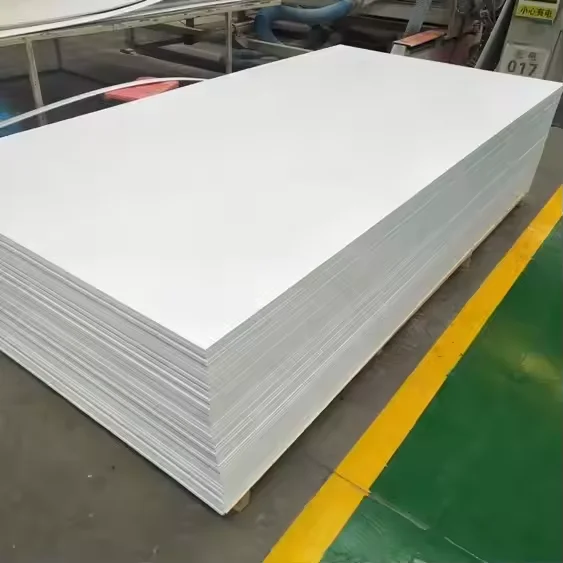
The decision to select pvc forex board for outdoor signs is driven by multiple practical factors that directly impact sign performance, longevity, and total cost of ownership. Unlike traditional wood-based substrates that deteriorate when exposed to moisture, or metal panels that add excessive weight and handling complications, PVC forex board provides a balanced solution that addresses the core requirements of outdoor signage applications. The cellular structure of this material creates a rigid yet lightweight panel that resists warping, maintains dimensional stability across temperature fluctuations, and provides an excellent surface for vinyl graphics, direct printing, and painted finishes. For businesses seeking reliable outdoor communication tools that maintain professional appearance without frequent replacement or maintenance, the specific properties of pvc forex board deliver measurable value throughout the sign's operational lifespan.
Superior Weather Resistance for Long-Term Outdoor Exposure
Moisture and Water Resistance Characteristics
One of the primary reasons to choose pvc forex board for outdoor signs centers on its exceptional resistance to moisture penetration and water damage. The closed-cell foam structure of this material prevents water absorption that causes swelling, delamination, and structural failure in alternative substrates. Unlike wood-based materials that expand when wet and contract when dry, creating cyclic stress that leads to cracking and coating failure, pvc forex board maintains consistent dimensions regardless of humidity levels or direct water contact. This moisture immunity proves particularly valuable in climates with high rainfall, coastal environments with salt-laden air, or locations where signs may experience regular washing or condensation exposure.
The waterproof nature of pvc forex board eliminates the substrate deterioration that shortens sign lifespan and creates maintenance burdens. When water penetrates porous materials, it can freeze during cold periods, creating expansion forces that crack and damage the substrate from within. PVC forex board's non-absorbent structure prevents this freeze-thaw cycle damage, making it suitable for outdoor applications in regions with cold winters. Additionally, the material does not support mold, mildew, or fungal growth that can develop on organic substrates exposed to persistent moisture, ensuring signs maintain clean appearance and structural soundness even in humid or shaded locations where biological growth typically occurs.
UV Stability and Color Retention
Extended exposure to ultraviolet radiation degrades many plastic materials, causing brittleness, surface chalking, and yellowing that compromise both structural integrity and visual appearance. Quality pvc forex board incorporates UV stabilizers throughout the material formulation, providing inherent protection against photodegradation. This UV resistance ensures the substrate maintains its physical properties and white surface appearance throughout years of direct sunlight exposure, preventing the yellowing and surface breakdown that would otherwise undermine sign quality and necessitate premature replacement.
The UV stability of pvc forex board extends beyond the substrate itself to benefit the entire sign assembly. Because the board maintains its structural properties without becoming brittle or degraded, applied graphics and coatings remain properly supported throughout their intended lifespan. The dimensional stability provided by UV-resistant pvc forex board prevents the warping and distortion that can cause vinyl graphics to lift at edges or painted finishes to crack. This comprehensive weather resistance makes the material particularly suitable for high-value outdoor signs where long-term appearance and readability are essential, such as building identification, directional signage, and commercial advertising displays that represent significant investment and brand image.
Temperature Range Performance
Outdoor signs must function reliably across the full temperature spectrum experienced in their installation location, from summer heat peaks to winter cold extremes. PVC forex board demonstrates excellent thermal stability, maintaining structural integrity and flatness across temperature ranges that cause significant problems for alternative materials. The material's coefficient of thermal expansion is relatively low, meaning it undergoes minimal dimensional change when subjected to heating and cooling cycles. This stability prevents the buckling, warping, and stress concentration that develops in materials with higher expansion rates, ensuring outdoor signs remain flat and properly aligned regardless of seasonal temperature variations.
The temperature performance of pvc forex board becomes particularly important in installations where signs experience direct solar heating, which can elevate surface temperatures substantially above ambient air temperature. Dark-colored graphics applied to signs can absorb significant solar energy, creating localized heating that would warp less stable substrates. PVC forex board's thermal resistance prevents this heat-induced deformation, maintaining sign flatness and appearance even under intense sun exposure. Similarly, in cold climates, the material resists the embrittlement that affects some plastics at low temperatures, ensuring signs remain impact-resistant and structurally sound throughout winter conditions.
Practical Installation and Handling Advantages
Lightweight Construction Benefits
The expanded foam structure of pvc forex board creates a material with exceptional strength-to-weight ratio, delivering practical advantages throughout the sign fabrication and installation process. Compared to solid materials like wood panels, aluminum composite, or acrylic sheet of similar thickness, pvc forex board weighs significantly less while maintaining sufficient rigidity for outdoor sign applications. This reduced weight simplifies handling during fabrication, reduces shipping costs, and most importantly, minimizes structural requirements for sign mounting. Lightweight signs place less stress on mounting hardware and support structures, reducing installation complexity and the risk of sign failure due to inadequate support.
For large-format outdoor signs, the weight advantage of pvc forex board becomes particularly significant. A 4x8 foot panel of pvc forex board in standard thickness can be handled by a single person, whereas alternative materials of comparable rigidity might require two-person teams or mechanical assistance. This ease of handling reduces labor costs during installation and allows for sign placement in locations where heavy materials would present logistical challenges. The lightweight nature also reduces wind loading on sign structures, an important consideration for elevated or freestanding signs where wind resistance directly impacts structural engineering requirements and installation costs.
Versatile Fabrication and Finishing Options
The workability of pvc forex board contributes significantly to its suitability for outdoor sign production. The material can be cut with standard woodworking tools, routed for dimensional effects, heat-formed for curved applications, and finished using multiple graphic application methods. This fabrication versatility allows sign makers to create custom outdoor signs that meet specific design requirements without investing in specialized equipment or dealing with material limitations that restrict creative options. Whether a project requires precision-cut lettering, routed edge details, or complex shapes, pvc forex board accommodates diverse fabrication techniques with consistent results.
Surface finishing options for pvc forex board include vinyl graphics application, direct digital printing, screen printing, and paint application, providing flexibility to match project requirements and budget constraints. The smooth, uniform surface of the material provides excellent adhesion for vinyl films and inks, ensuring graphics remain securely bonded throughout outdoor exposure. For direct printing applications, the white surface of pvc forex board provides ideal substrate characteristics that enhance color vibrancy and image clarity. The material's dimensional stability ensures printed graphics remain properly registered and undistorted, maintaining professional appearance throughout the sign's service life.
Efficient Mounting and Support Systems
The physical properties of pvc forex board facilitate straightforward mounting using various attachment methods suitable for outdoor applications. The material accepts screws, rivets, and mechanical fasteners with good retention characteristics, allowing secure attachment to frames, posts, or building surfaces. Unlike brittle materials that crack when drilled or materials with tendency to split when fasteners are installed near edges, pvc forex board provides reliable fastening performance that withstands the stress concentrations created by mechanical attachments. This fastening reliability ensures outdoor signs remain securely mounted even when subjected to wind loads and other environmental forces.
For frameless installations, pvc forex board can be mounted using adhesive attachment systems, including double-sided foam tapes and construction adhesives formulated for outdoor use. The smooth back surface of the material provides excellent bonding area for adhesive mounting, while the lightweight nature ensures adhesive systems remain effective without risk of adhesive failure due to excessive weight. Standoff mounting systems, which create dimensional separation between sign and wall surface for enhanced visual impact, work particularly well with pvc forex board because the material's rigidity prevents sagging while its light weight minimizes stress on mounting hardware. These diverse mounting options provide design flexibility while ensuring reliable outdoor performance.
Economic Value and Cost-Effectiveness
Competitive Material Cost Structure
When evaluating substrate options for outdoor signs, pvc forex board offers compelling economic advantages that contribute to its widespread adoption. The material cost per square foot typically positions pvc forex board as a mid-range option—more economical than premium materials like aluminum composite panels or thick acrylic, yet providing substantially better performance than economy alternatives like corrugated plastic. This pricing structure delivers excellent value proposition, particularly when the material's durability, longevity, and minimal maintenance requirements are factored into total cost of ownership calculations. For businesses producing outdoor signs in volume or requiring multiple units for property-wide signage systems, the material cost advantage of pvc forex board represents significant budget savings without compromising quality or performance.
The manufacturing efficiency of pvc forex board production contributes to its favorable pricing. Large-scale extrusion processes create consistent, high-quality sheets in standard sizes that optimize material utilization and minimize waste during sign fabrication. This manufacturing efficiency translates to stable pricing and reliable material availability, important considerations for sign shops planning production schedules and estimating project costs. Additionally, the material is available in various thicknesses, allowing fabricators to select the most economical option that meets specific application requirements rather than over-specifying substrate thickness and incurring unnecessary material costs.
Extended Service Life Reduces Replacement Frequency
The true economic value of pvc forex board becomes most apparent when considering sign longevity and replacement cycles. Outdoor signs fabricated from less durable materials may require replacement every few years as substrate deterioration, warping, or aesthetic degradation renders them ineffective. In contrast, signs built on pvc forex board substrates routinely deliver seven to ten years of outdoor service or longer when properly fabricated and maintained. This extended lifespan dramatically reduces the annualized cost of outdoor signage, as businesses avoid frequent replacement expenses and the associated labor costs for sign removal, fabrication, and reinstallation.
The longevity advantage of pvc forex board extends beyond direct replacement cost savings to include reduced business disruption and maintained brand presence. Signs that fail prematurely create gaps in business communication, potentially affecting customer wayfinding, brand visibility, or regulatory compliance. By selecting a substrate material with proven outdoor durability, businesses ensure continuous sign performance without the complications of unplanned replacement. This reliability proves particularly valuable for multi-location businesses implementing standardized signage programs, where sign failures across multiple sites would create significant management burden and inconsistent brand presentation.
Minimal Maintenance Requirements
The maintenance characteristics of pvc forex board contribute additional economic value throughout the sign's operational life. Unlike wood substrates that require periodic sealing and repainting to prevent moisture damage, or metal substrates prone to corrosion that demands preventive treatment, pvc forex board requires minimal maintenance intervention. Routine cleaning with mild detergent and water suffices to maintain sign appearance, with no need for protective coatings, rust prevention treatments, or structural reinforcement activities. This low maintenance requirement reduces ongoing operational costs and eliminates the need for specialized maintenance programs or scheduled service intervals.
The ease of maintenance becomes particularly advantageous for businesses operating multiple outdoor signs across large facilities or geographic areas. Maintenance-intensive sign substrates create recurring labor demands and material costs that accumulate substantially over time. PVC forex board's inherent durability and weather resistance eliminate these maintenance obligations, allowing facilities management resources to focus on higher-priority activities. For organizations managing signage portfolios encompassing dozens or hundreds of outdoor signs, the maintenance savings associated with pvc forex board substrates represent significant operational efficiency and cost reduction compared to higher-maintenance alternative materials.
Environmental Conditions and Application Suitability
Performance in Coastal and High-Humidity Environments
Coastal locations present particularly challenging conditions for outdoor signage due to salt-laden air, high humidity, and intense UV exposure from reflected sunlight off water surfaces. In these demanding environments, pvc forex board demonstrates superior performance compared to materials vulnerable to corrosion or moisture damage. The material's complete resistance to salt corrosion eliminates the substrate degradation that affects aluminum and steel components, while its moisture immunity prevents the swelling and delamination that destroys wood-based substrates in high-humidity conditions. For businesses operating in coastal commercial districts, resort properties, or marine facilities, pvc forex board provides reliable outdoor signage that maintains appearance and functionality despite aggressive environmental conditions.
The closed-cell structure of pvc forex board prevents the capillary moisture absorption that causes ongoing problems in porous materials exposed to humid environments. In tropical or subtropical climates where relative humidity remains high year-round, this moisture resistance ensures signs maintain dimensional stability and surface quality without the warping, paint blistering, or biological growth that affects moisture-sensitive substrates. The material performs equally well in desert environments where extreme temperature swings between day and night create challenging expansion-contraction cycles, demonstrating the versatility of pvc forex board across diverse climate conditions.
Urban and Industrial Environment Durability
Outdoor signs in urban and industrial settings face exposure to air pollutants, vehicle emissions, and industrial contaminants that can accelerate material degradation. PVC forex board demonstrates excellent chemical resistance to these environmental pollutants, maintaining structural integrity and surface quality despite exposure to acidic precipitation, automotive exhaust residues, and industrial atmospheric contaminants. This chemical resistance proves particularly valuable for signs located near roadways with heavy traffic, industrial facilities, or urban areas with elevated pollution levels. Unlike materials that may experience accelerated aging or surface etching when exposed to atmospheric chemicals, pvc forex board maintains consistent performance characteristics throughout its service life.
The impact resistance of pvc forex board provides additional durability advantage in urban environments where signs may experience occasional contact or minor impacts during routine activities. The material's foam structure provides cushioning effect that absorbs impact energy without shattering or permanently deforming, unlike brittle materials that crack upon impact or thin materials that dent easily. This resilience ensures outdoor signs maintain professional appearance even when subjected to the minor physical stresses common in high-traffic urban locations, reducing damage-related replacement costs and maintaining consistent brand presentation.
Wind Load and Structural Considerations
Wind resistance represents a critical factor in outdoor sign design, particularly for large-format signs or installations in locations experiencing high wind speeds. The lightweight nature of pvc forex board reduces wind loading on sign structures compared to heavier alternative materials, simplifying structural engineering and reducing mounting system costs. However, the material's rigidity ensures signs maintain flatness and resist the flexing that could fatigue mounting hardware or create movement that undermines professional appearance. This combination of light weight and structural rigidity makes pvc forex board particularly suitable for elevated signs, canopy-mounted applications, and freestanding structures where wind loads directly impact design requirements and installation costs.
For coastal or elevated locations where wind resistance is particularly critical, pvc forex board can be specified in heavier gauge options that provide increased rigidity while still maintaining favorable weight characteristics compared to alternative materials. Sign designers can optimize thickness selection to balance weight considerations, rigidity requirements, and span capabilities, ensuring outdoor signs perform reliably under site-specific wind conditions. The availability of various thickness options allows engineers to properly specify pvc forex board for applications ranging from small directional signs in protected locations to large-format advertising structures exposed to significant wind forces.
FAQ
How long do outdoor signs made from pvc forex board typically last?
Outdoor signs fabricated from pvc forex board typically deliver seven to ten years of reliable service life, with some installations exceeding this range when properly fabricated, installed, and maintained. The actual longevity depends on several factors including geographic location, exposure intensity, graphic application method, and mounting configuration. Signs in protected locations or moderate climates generally achieve longer service life than those exposed to extreme conditions. The substrate itself remains structurally sound for considerably longer than the applied graphics, meaning signs can often be refurbished with new graphics on the existing pvc forex board substrate rather than requiring complete replacement, further extending the economic value of the original material investment.
Can pvc forex board be used for very large outdoor signs?
PVC forex board is suitable for large outdoor signs when properly engineered with appropriate thickness specification and adequate structural support. Standard sheet sizes typically measure 4x8 feet, though larger formats may be available from some manufacturers. For signs exceeding standard sheet dimensions, multiple panels can be joined using various techniques including mechanical fastening to underlying frames or adhesive bonding with proper joint reinforcement. The key to successful large-format applications lies in selecting appropriate material thickness, providing adequate mounting support to prevent sagging or warping, and implementing proper framing systems that distribute wind loads and maintain sign flatness. Sign designers should consider local wind loads and span capabilities when specifying pvc forex board for large outdoor applications.
What thickness of pvc forex board should be used for outdoor signs?
Outdoor sign applications typically utilize pvc forex board in thicknesses ranging from 3mm to 19mm, with selection driven by sign size, mounting method, and expected service conditions. Small signs with dimensions under two feet and fully supported mounting can perform well with 3mm to 6mm material. Medium signs from two to four feet typically benefit from 6mm to 10mm thickness to provide adequate rigidity without excessive weight. Large signs exceeding four feet or applications with point-mounted systems generally require 10mm to 19mm material to prevent deflection and maintain flatness. Thicker materials offer improved rigidity and wind resistance but increase weight and material cost, so optimal selection balances performance requirements against practical and economic considerations for each specific application.
Does pvc forex board require special treatment before applying graphics?
PVC forex board typically does not require extensive surface preparation for most graphic application methods, though some basic steps optimize adhesion and ensure long-term graphic performance. For vinyl graphic application, cleaning the surface with isopropyl alcohol removes any manufacturing residues or contaminants that might compromise adhesion. Some fabricators lightly abrade the surface with fine sandpaper to create additional mechanical bonding surface, though this is generally unnecessary for quality vinyl products and properly cleaned substrates. For paint application, light sanding creates better mechanical adhesion, and some painters apply specialized primers formulated for plastics to enhance paint bonding. Direct digital printing on pvc forex board generally requires no surface preparation beyond cleaning, as the material's smooth surface provides excellent ink receptivity for UV-curable and solvent-based printing systems commonly used in sign production.