
 EN
EN
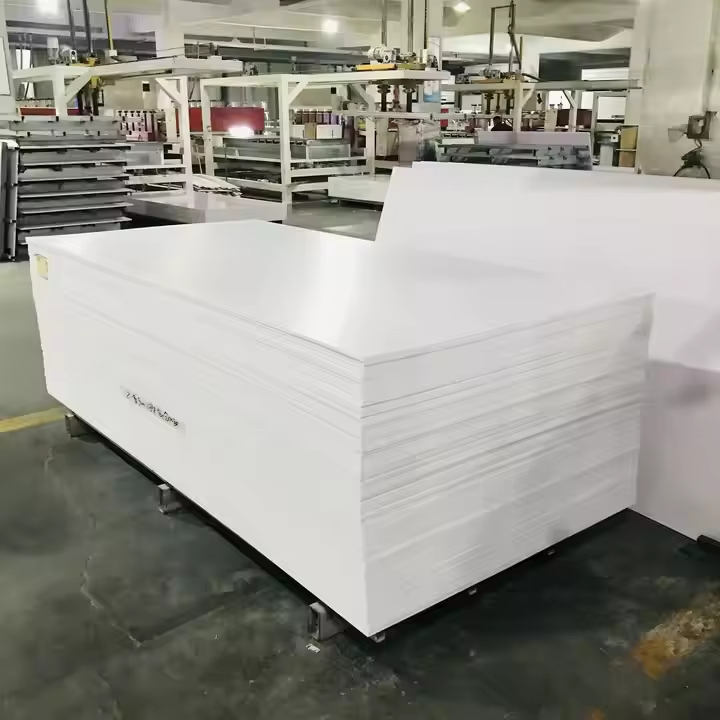
PVC foam sheet has emerged as one of the most versatile and widely adopted materials in modern manufacturing and construction industries. This lightweight yet durable material combines the chemical resistance of polyvinyl chloride with the structural advantages of foam technology, creating a product that serves multiple industrial applications. Understanding the fundamental properties and manufacturing process of pvc foam sheet enables engineers, designers, and procurement professionals to make informed decisions about material selection for their specific projects.
The manufacturing process behind pvc foam sheet involves sophisticated chemical and physical transformations that determine the final material characteristics. From initial polymer preparation through foam expansion and final curing, each step influences critical properties such as density, cell structure, surface quality, and mechanical performance. This comprehensive examination of pvc foam sheet properties and manufacturing reveals how controlled production parameters create materials tailored for diverse industrial requirements, ranging from signage and display applications to marine construction and architectural panels.
Core Physical Properties of PVC Foam Sheet
Density and Cell Structure Characteristics
The density profile of pvc foam sheet typically ranges from 0.3 to 0.8 grams per cubic centimeter, significantly lower than solid PVC materials. This reduced density results from the controlled foam structure created during manufacturing, where chemical blowing agents generate microscopic cells throughout the material matrix. The cell size distribution directly influences mechanical properties, with smaller, more uniform cells generally providing superior strength-to-weight ratios and smoother surface finishes.
Cell morphology in pvc foam sheet can be classified as either closed-cell or open-cell structures, with closed-cell configurations being more common in commercial applications. Closed-cell structures provide better moisture resistance, thermal insulation properties, and structural integrity. The foam expansion ratio, controlled during manufacturing, determines the final density and influences properties such as compressive strength, flexural modulus, and impact resistance.
Mechanical Performance Parameters
Tensile strength in pvc foam sheet varies considerably based on density and manufacturing quality, typically ranging from 15 to 35 MPa for standard grades. The material exhibits excellent dimensional stability under normal operating conditions, with thermal expansion coefficients lower than many alternative foam materials. Flexural properties demonstrate the material's ability to withstand bending loads, making it suitable for applications requiring structural performance without excessive weight.
Impact resistance represents another crucial mechanical property of pvc foam sheet, particularly important for applications involving handling stress or environmental impact. The foam structure helps absorb impact energy through controlled deformation, while the PVC matrix provides recovery characteristics. Compressive strength values generally range from 1.5 to 4.5 MPa, depending on density and cell structure optimization achieved during the manufacturing process.
Chemical Resistance and Environmental Properties
Chemical Compatibility Profile
PVC foam sheet demonstrates exceptional resistance to a wide range of chemicals commonly encountered in industrial environments. The material shows excellent compatibility with acids, bases, salts, and most organic solvents, making it suitable for applications in chemical processing facilities, laboratories, and marine environments. This chemical inertness stems from the stable polymer structure of PVC combined with appropriate stabilizer systems integrated during manufacturing.
Moisture absorption characteristics of pvc foam sheet remain minimal due to the closed-cell structure and hydrophobic nature of the PVC polymer. Water absorption typically stays below 0.5% by weight even under prolonged exposure conditions. This low moisture uptake helps maintain dimensional stability and prevents degradation of mechanical properties in humid environments, making pvc foam sheet particularly valuable for outdoor applications and marine construction projects.
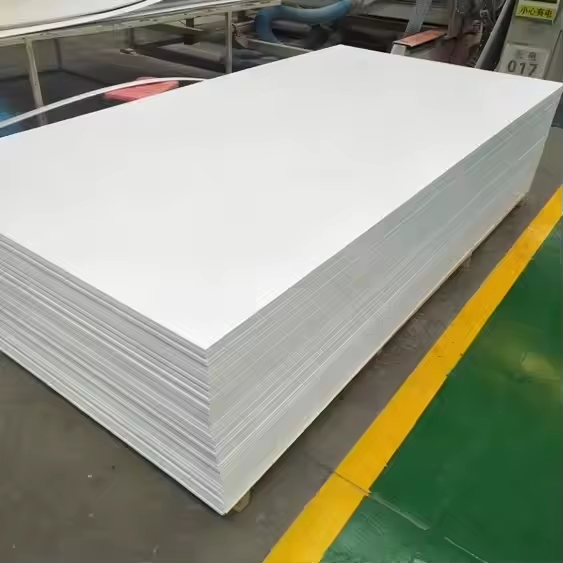
UV Resistance and Weatherability
Ultraviolet radiation resistance in pvc foam sheet depends significantly on stabilizer packages incorporated during manufacturing. Standard grades provide moderate UV resistance suitable for indoor applications, while specially formulated grades include enhanced UV stabilizers for extended outdoor exposure. The manufacturing process allows for precise control of stabilizer distribution, ensuring consistent protection throughout the foam structure rather than just surface treatment.
Temperature performance of pvc foam sheet spans a useful range from -20°C to 60°C for continuous service, with short-term exposure capabilities extending these limits. The glass transition temperature of the PVC matrix influences low-temperature performance, while thermal stability additives control high-temperature behavior. Manufacturing process parameters directly affect the final temperature resistance by influencing polymer crosslinking and stabilizer effectiveness.
Manufacturing Process Overview
Raw Material Preparation and Formulation
The manufacturing process for pvc foam sheet begins with precise formulation of the base polymer compound. High-quality PVC resin serves as the primary component, typically comprising 60-70% of the total formulation by weight. Processing aids, thermal stabilizers, and impact modifiers are carefully measured and blended to achieve specific performance targets. The formulation stage critically determines final product properties, requiring precise control of additive concentrations and mixing parameters.
Chemical blowing agents represent essential components in pvc foam sheet manufacturing, responsible for creating the characteristic cellular structure. Azodicarbonamide and sodium bicarbonate are commonly used blowing agents, each offering different decomposition temperatures and gas generation profiles. The selection and concentration of blowing agents directly influence foam density, cell size distribution, and surface quality of the finished pvc foam sheet product.
Extrusion and Foam Formation Process
The extrusion process transforms the formulated compound into pvc foam sheet through controlled heating and pressure application. Twin-screw extruders typically provide optimal mixing and temperature control, ensuring uniform distribution of all components throughout the material matrix. Temperature profiles along the extruder barrel are carefully programmed to achieve proper polymer melting while preventing premature blowing agent decomposition.
Foam expansion occurs as the molten polymer compound exits the extrusion die and experiences pressure reduction. This controlled expansion creates the cellular structure characteristic of pvc foam sheet while maintaining surface integrity. Die design plays a crucial role in determining sheet thickness uniformity and surface quality, requiring precise engineering to accommodate the expanding foam while maintaining dimensional control.
Quality Control and Processing Parameters
Temperature Control Systems
Temperature management throughout the manufacturing process critically affects pvc foam sheet quality and consistency. Barrel temperatures must be precisely controlled to ensure proper polymer melting without thermal degradation, typically maintained between 160°C and 190°C depending on the specific formulation. Excessive temperatures can cause premature blowing agent activation or polymer degradation, while insufficient heating results in poor mixing and inconsistent foam structure.
Cooling systems following extrusion control the final cell structure formation and dimensional stability of pvc foam sheet. Controlled cooling rates prevent cell collapse while allowing proper stress relaxation in the polymer matrix. Water cooling systems or air cooling chambers provide the necessary heat removal, with cooling rates optimized based on sheet thickness and desired surface quality specifications.
Surface Quality and Dimensional Control
Surface smoothness of pvc foam sheet depends on careful control of foam expansion and cooling parameters during manufacturing. Rapid cooling can create surface irregularities, while excessive expansion may result in rough or orange-peel textures. Manufacturing process optimization involves balancing expansion rates with cooling profiles to achieve smooth, uniform surfaces suitable for printing, laminating, or direct use applications.
Dimensional accuracy in pvc foam sheet manufacturing requires precise control of extrusion speed, die gap settings, and take-off systems. Thickness variations typically must be maintained within ±5% for commercial applications, demanding continuous monitoring and adjustment of process parameters. Width control systems and edge trimming equipment ensure consistent sheet dimensions throughout production runs, meeting the tight tolerances required for automated fabrication processes.
Applications and Performance Optimization
Industrial Application Requirements
Different applications of pvc foam sheet require specific property combinations achieved through manufacturing process modifications. Signage applications prioritize surface smoothness and printability, demanding tight control of cell size and surface texture during foam formation. Construction applications emphasize structural properties and weatherability, requiring optimization of density, stabilizer systems, and mechanical performance characteristics.
Marine and outdoor applications place additional demands on pvc foam sheet properties, particularly regarding UV resistance and moisture protection. Manufacturing processes for these applications incorporate enhanced stabilizer packages and may include surface treatment steps to further improve weatherability. The foam structure must maintain integrity under cyclic loading and temperature variations commonly encountered in marine environments.
Customization Through Process Control
Manufacturing flexibility allows customization of pvc foam sheet properties for specific applications through process parameter adjustment. Density can be varied by controlling blowing agent concentration and processing conditions, enabling optimization for weight-critical applications or structural requirements. Color matching and surface texture modification are achievable through additive selection and processing parameter adjustment during manufacturing.
Thickness variations in pvc foam sheet can be accommodated through die design modifications and processing speed adjustments. Custom thickness requirements often demand specific cooling and handling systems to maintain dimensional accuracy and prevent warping. The manufacturing process scalability enables production of both standard commercial grades and specialized products meeting unique application requirements while maintaining consistent quality standards.
FAQ
What determines the density range in PVC foam sheet manufacturing?
Density in pvc foam sheet manufacturing is primarily controlled by the concentration and type of chemical blowing agents used, along with processing temperature and pressure conditions. Higher blowing agent concentrations create more gas generation and lower density, while processing parameters affect the expansion efficiency and final cell structure. Typical manufacturing processes can achieve densities ranging from 0.3 to 0.8 g/cm³ through precise control of these variables.
How does the manufacturing process affect chemical resistance properties?
The manufacturing process influences chemical resistance of pvc foam sheet through stabilizer distribution, processing temperature control, and polymer molecular weight preservation. Proper temperature management prevents thermal degradation that could create vulnerable sites for chemical attack, while uniform mixing ensures consistent stabilizer protection throughout the foam structure. The closed-cell structure created during manufacturing also provides physical barriers against chemical penetration.
What manufacturing factors control surface quality in PVC foam sheets?
Surface quality in pvc foam sheet manufacturing depends on foam expansion rate control, cooling system design, and die surface conditions. Controlled expansion prevents surface irregularities, while optimized cooling rates ensure proper cell formation near the surface. Die surface finish and temperature directly transfer to the sheet surface, making precision tooling maintenance essential for consistent surface quality in production.
Can the manufacturing process be adapted for different thickness requirements?
Yes, pvc foam sheet manufacturing processes can be adapted for various thickness requirements through die gap adjustments, extrusion speed modifications, and cooling system optimization. Thicker sheets may require longer cooling zones and modified temperature profiles to ensure uniform foam structure throughout the cross-section, while thinner sheets demand precise die design and enhanced surface cooling to maintain dimensional accuracy and prevent warping during production.